
Luminaries is a curated recognition and brand elevation initiative designed for top-performing leaders and organizations featured in Newsweek’s prestigious rankings.
By combining personalized storytelling with high-profile media exposure, we transform recognition into a powerful strategic asset.




The automotive industry is notoriously male dominated, but in the last decade, women have become prominent leaders. While gender-based parity has not been achieved, companies have made strides toward equality.
Mercedes-Benz USA (MBUSA) is ranked highly on Newsweek's list of America's Greatest Workplaces for Women 2025, earning 4.5 out of 5 stars, a rating matched by Michelin and Daimler Trucks North America. Rivian, Harley-Davidson and Toyota were given four-star rankings.
The ratings, presented by Plant-A Insights Group and Newsweek, are based on data available about supportive workplace policies that actively focus on diversity and inclusion.
"I don't necessarily think that it's always accurate that automotive is a place that is unfriendly to women," Melody Lee, chief marketing officer at Mercedes-Benz USA, told Newsweek. "I've been able to make a career in it, and a lot of women have, but we need a signal like this award that this industry is open to all and open to a diversity of talent and perspective."
Lee's pathway to success was influenced by strong women who came before her. She said: "I draw inspiration from those who came before me, the women who not only go into a room with confidence but sit at the table. They make themselves known. They make their presence known. They champion the voices of others in the room. The best women leaders that I've seen come before me are the ones who have said to all the other women in the room, 'What do you think?' so that other women have a voice."
It wasn't just the way women uplifted other women that influenced Lee, it was the way they conducted themselves in the workplace. "In those early days of being in crisis communications, I would sit in war rooms managing some major acquisitions, or mergers or crises, and it was always amazing to see the women that would be in the room with me. These were the women that were called upon in companies' deepest moments of crisis, just because of just how calm, self-possessed and effective they were. They knew their space, and they needed to navigate through something that was intense."
Among those women that showed Lee the way are Amy Paddock, now executive vice president at Burson, whom Lee worked with early in her career. "I remember being in complete awe of her and how organized she was and how she just lifted all those young women around her up," Lee said.
After Lee left crisis communications, she worked at General Motors during a pivotal time in the company's history. "I was alongside Mary Barra during the ignition switch recall, and to see a woman under fire and to perform with like such grace is inspiring. I will always look up to Mary," Lee said.
As she sits in her current role, Lee is inspired by the way Heike Scheuble, vice president and managing director Vans, helped her navigate company terrain. "Heike took me under her wing as soon as I joined the company. She cares a lot about people and was such a fantastic example right out of the gate here at Mercedes-Benz. I'll always be grateful," she said.
MBUSA's parent company, Mercedes-Benz, has a number of initiatives to uplift women throughout the world in their workplace.
Lee said: "In male-dominated industries, it's important to have these programs that signal that women are seen in a company and provided with tools to really succeed.
"We have both a business resource group called DriveHer that champions women and allows them to find space and time with one another, as well as training and development programs that are similar to initiatives coming out of headquarters."
Raising women up at MBUSA goes beyond employee initiatives. Lee is able to affect change through marketing, examining casting for advertising. "Does the driver of an AMG in a TV commercial always have to be a man? It does not," she said.
Further, Lee is utilizing MBUSA assets to propel the company into one that brings women together across different industries. "In April at the Augusta National Women's Amateur, which is the weekend before the Masters, we will bring together 40 executive women from across different industries again this year who are influential leaders in their respective disciplines to network and inspire each other," Lee explained.
Whether leading in the boardroom, the office next door, or on television, Lee said that it's important for women to show up for each other. "It's not just about having a voice yourself and demonstrating that you can have one, but it is really going several steps further. It's not just about having a voice yourself and demonstrating that you can have one, but it's also allowing space and allowing time for other people to have that voice, other women in particular. To me, that's real leadership. That's a real champion."
The working world is undergoing a wide and constant shift. Technology advancements, the proliferation of remote work and changes in external conditions have altered so many elements of company strategy. This climate demands a new skill set of leaders—that they be adaptable and emotionally intelligent.
"Emotional intelligence is a foundational leadership skill set that requires individuals to embrace self-awareness, regulate their responses, be accepting of feedback and learn from their mistakes," Kate Duchene, CEO of RGP, a talent strategy consulting firm, told Newsweek via email. "Empathy is certainly a very big part of that, yet these types of soft skills were overlooked as leadership qualities for a long time."
Amid ongoing, rapid evolution of the business climate, employee engagement is in decline. A recent study from MetLife highlighted "notable drops" in holistic health, productivity and engagement, with employees pointing to increasing medical costs and economic uncertainty as key sources of stress. Since the pandemic, mental health has also been a rising workplace challenge, and it's further exacerbated by socioeconomic issues, global conflicts and political disagreements that increasingly come up at work. The impact of stress on workers and in the workplace can be significant.
"The pace of technological, geopolitical, and market change means constant organizational change. This can result in a high baseline level of uncertainty, worry, and stress," Gabriella Rosen Kellerman, MD, chief innovation officer at BetterUp, a coaching and well-being platform, told Newsweek via email.
"Asking about a topic like stress doesn't mean you have to know how to solve a problem. It shows that you care, as a manager, and you're paying attention to the employee's whole person," Rosen Kellerman said. "You can simply express empathy and recommend resources available through your organization."
Empathy is a crucial leadership trait to address declining employee engagement and rising stress. It has an impact on culture, retention, resilience and flexibility, according to conversations with HR leaders, leadership training practitioners and consulting professionals. It drives forward the concepts of psychological safety and trust and fairness that help define a positive company culture.
"Twelve percent of employees with the lowest levels of psychological safety said they were likely to quit within a year. But when psychological safety is high, only 3 percent of employees are at risk of quitting," Boston Consulting Group wrote in a 2024 report.
"There's no question that empathy is an essential leadership skill, particularly as the pressure mounts to preserve workforce stability and engagement, given everything that is going on in the external environment on top of organizational change that employees across industries and across the world are facing," Girish Ganesan, chief people officer at S&P Global, told Newsweek.
The rise of remote work and hybrid arrangements has of course led to physical distance between managers and their teams. This has been good for employees' sense of autonomy, but managers are missing out on nonverbal cues and the opportunity to understand a person's baseline behavior in order to be able to identify if something is wrong.
As employees demand more trustworthy behavior and communication ability from their leaders, those leaders are looking for more consistent, predictable performance from employees.
"Our research shows a direct and powerful relationship between empathetic leadership and feelings of psychological safety in the workforce, giving leaders a clear directive to be empathetic and thereby engender psychological safety. This in turn delivers key workplace benefits to both the organization and its employees," Boston Consulting Group's 2024 report continued.
A 2024 research paper by Anders Friis Marstand and Olga Epitropaki of Durham University Business School in the U.K. and Ilias Kapoutsis of the Athens University of Economics and Business in Greece found that managerial acts of initiating structure, such as clarifying expectations, providing feedback and showing concern, are keys to high performance for remote or hybrid teams, noting that showing concern can include expressing appreciation and support or looking out for employees' welfare.
"It's worthwhile to periodically ask about workload and overall stress levels during one-on-one check-ins with employees, though they may or may not feel comfortable honestly answering the question when asked by a manager," Rosen Kellerman said.
While initiating structure helps establish norms and standards between a manager and direct report, "the leader's expression of concern can also instill positive emotions in followers that can decrease their perception of psychological distance from the leader," the Marstand, et al., paper continued. This can be especially important when colleagues are not working together every day face-to-face.
"Our study has important practical implications, underscoring the crucial role leaders play in guiding employees towards adaptive coping strategies and maintaining their focus and productivity in remote and hybrid work settings," the research paper stated.
In a world where STEM and the high value of technical skills get a lot of attention, interpersonal skills can sometimes be de-emphasized, Duchene noted to Newsweek. Solutions include rebranding "soft skills" to "human skills" or "power skills" and messaging the value of those skills across the organization.
"One of the really important things is how skills of empathy are positioned, and that they are positioned as human skills," Christopher Hannegan, principal, workforce transformation at PwC, told Newsweek. "They're very important business skills. When companies send a message that human skills are as important as technical skills, that then creates an environment where people can start to learn in new ways."
Measurement around empathy can come from a mix of qualitative and quantitative feedback, Ganesan and Hannegan noted. This can include engagement surveys to track questions around psychological safety, asking if people feel comfortable raising questions or disagreements about company strategy, and if they are comfortable sharing ethical concerns they may have at work.
Ultimately, the push for empathy at work represents a culture shift meant to drive engagement and retention. Consulting firm McKinsey has noted the potential for empathetic leadership to drive "higher productivity, a stronger workplace culture, and better organizational health."
Moreover, managers who have high turnover are not likely to have successful teams given the disruption that a string of departures can cause.
"As companies are looking at the levels and drivers of employee engagement, in my experience, listening, empathy, having that human connection is absolutely one of them. It doesn't really matter what industry you're in," Hannegan said.
Ganesan shared that at S&P Global, they embed empathy "across a variety of different programs and practices," including manager training that includes emotional intelligence and empathy components, as well as in-house coaching available to all employees.
"Things like guiding people through change, creating psychological safety," he said. "Showing your emotional intelligence dealing with ambiguity, having difficult conversations. These are just routine leadership attributes now."
He added that flexible working models are also a form of empathetic leadership in his view, and that HR departments can help managers by guiding them to watch for signs of burnout, keep open lines of communication and make themselves available for help. S&P Global was acknowledged as the Human Company of the Year by TLC Lions, a leadership training company, in an October 2024 ceremony.
"Creating that psychological safety cannot be underestimated," Ganesan said, "particularly if you want that sense of connectedness back to the organization."
In October 2020, Blue Cross Blue Shield Association, one of the nation's top health insurance providers, named Kim Keck as the company's new president and CEO.
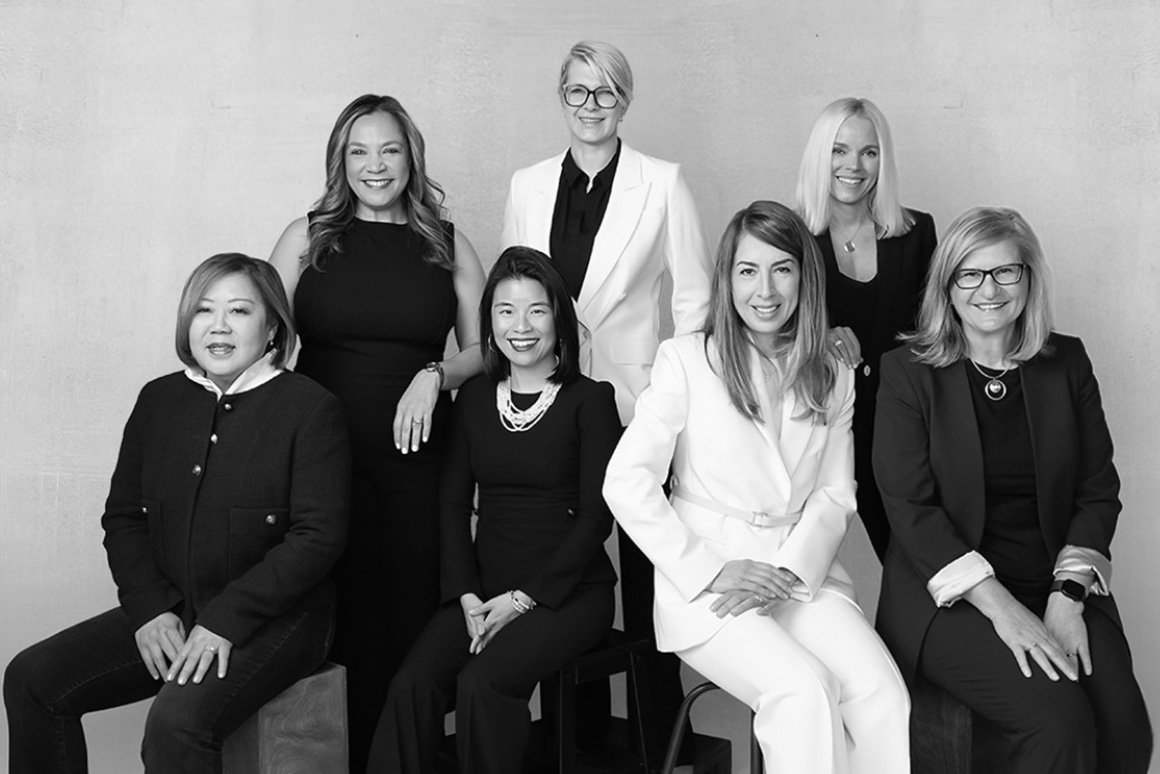
As the company's first female CEO, Keck told Newsweek via email that she's "keenly aware" that women comprise 80 percent of the health care workforce but hold only 20 percent of leadership positions. She, therefore, has been intentional in building an "accomplished, result-oriented, multidimensional leadership team—that happens to be all women."
"I believe that how we lead is just as important as driving results," Keck said. "Leading is not always about being the person talking at the front of the room. Leading from behind, putting the company's agenda before your own and making space for a wide range of perspectives are leadership traits I have admired in others and adapted to my own style."
Blue Cross Blue Shield Association (BCBS) received a five-star rating on Newsweek's Greatest Workplaces for Women 2025 ranking, which published earlier this month in partnership with data analytics firm Plant-A. This ranking includes the top 1,000 companies from 36 industries with ratings of four, four and a half, or five stars. To determine the list, Plant-A collected over 2 million company reviews from more than 225,000 interviews with full-time and part-time female employees in the U.S.
Employers were scored on several factors, including DEI initiatives, sustainability, compensation and benefits, training and career development, work-life balance, working environment, company image, mental well-being, job security and corporate culture.
Other KPIs provided by data provider Aniline and a media-monitoring investigation into unfair workplace practices or workplace harassment reports were factored into companies' final scores.
While conducting the surveys for this ranking, Plant-A found that women were less likely than men to recommend the companies they work for, with 51 percent of women giving high recommendations compared to 58 percent of men. This dissatisfaction, Plant-A found, might be caused by a large gap in what women want from their employers and their actual experiences in the workplace.
"This study highlights a pressing need for organizations to bridge the gap between women's workplace priorities and their experiences," Plant-A told Newsweek in a statement.
Female employees prioritized job security and stability and working environment, meaning the way a company's working conditions consider employees' physical and mental health, communication and transparency about decisions made by superiors. These were followed closely by mental well-being and compensation and benefits.
Workplaces, however, fell short of women's expectations. Only 66 percent of companies were rated by women as good or very good in job security and stability, working environment and compensation and benefits. Just 64 percent of companies were rated positively by women in the area of mental well-being. In all of these areas, Plant-A found that women, who make up nearly half of the U.S. workforce, rated companies lower than their male peers.
"With women remaining less likely to recommend their employers and feeling less satisfied overall, businesses must act decisively to retain and empower this vital segment of the workforce," Plant-A told Newsweek. "Addressing these disparities is not only a matter of fairness but also a critical step toward building inclusive, thriving workplaces."
Blue Cross Blue Shield Association scored well on many of the areas female respondents listed as their top priorities, according to Plant-A. Chief Human Resources Officer Lynn Merritt told Newsweek that BCBS offers unique benefits to stay competitive in the market. This includes caregiver leave that allows paid time off to take care of a parent or family member who is sick or in need and parental leave. The company also recently expanded its bereavement policy to allow for time off for the loss of any loved one over the course of a year.
"Knowing that how people grieve and where people grieve and funeral services might vary based on a whole host of things, we allow you to take that over the course of a year," Merritt said.
Newly designed office spaces also provide designated areas for wellness and reflection rooms, rooms to accommodate diverse abilities and family rooms to accommodate women returning to work after having children.
Meredith Wells Lepley, a psychologist, USC professor and organizational consultant with Workplace Surveys & Solutions, told Newsweek that women really want to be respected and understood by their employers. The best way to ensure those needs are being met is through employee listening.
"I would recommend [companies] do employee surveys among their female employees to better understand their perspectives and their experiences in the workplace, as well as their needs," she said. "Then I would recommend that the organization provide those women some autonomy to make things better."
This includes creating teams within the organization dedicated to assessing employee feedback, making recommendations to management and implementing solutions.
"People want to be heard, so let them speak," she said. "Once you let people express themselves, they feel so much better. So let them vent, let them share in a constructive way and then let them help and strategize."
When employees can see real action being done to accommodate their needs, they are more likely to be engaged, motivated and loyal to the company, Lepley said.
Through its biannual employee survey, BCBS has implemented companywide programs in response to employee suggestions. For example, the company implemented summer Fridays, or well-being Fridays, to allow employees more time to rest or participate in activities that boost their health and wellness.
"Our leaders get emails quite frequently during the summer of photos [and] personal stories about how [employees] got to spend time with their aging parents," Merritt said. "Having an employer that leans into that and supports that time [matters]. We've had some really touching stories from employees around how they use that time."
The company also introduced a program called Unmind, which offers counseling services to employees and gym memberships to support employees' mental and physical well-being.
In addition to positive feedback about these survey initiatives, Merritt said the company's low turnover rate is a "constant measure of employee satisfaction."
According to Plant-A, female respondents felt less supported than their male peers in terms of professional development and fair pay. Women in the U.S., on average, are paid 83.6 percent of what men are paid, according to U.S. Bureau of Labor Statistics data published last year.
Paychex, a payroll and human resources solutions company, has almost total pay equity, with women making 99.96 percent of what their male counterparts make, said Erica Toluhi, director of organizational development and employee relations.
"When we're looking at places to work, you want to know that your work is valued just as much as anybody else's," she said.
Through one of Paychex's employee resource groups, Women's Initiative Network, employees advocated for more leadership development for women.
Because women make up more than half of the workforce at Paychex, Toluhi said programs like this are intentional ways to "make sure everyone feels like they can be successful." She told Newsweek that having a more diverse workforce has contributed to an increase in productivity.
As a human resources company, Paychex aims to help other businesses succeed—so Toluhi understands that it is important to lead by example with their own internal policy.
"It's in our DNA," she said. "It's not just something you're going to read on our website, but people are going to talk to you about respect and integrity and partnership. And because of that, we are able to offer our client that next level of service, because we're demonstrating it here."
Lepley said having a leadership team that reflects the diversity of consumers and employees will enable a company to be more successful, citing a 2021 study from Zenger Folkman that showed women scored higher than men in a majority of key leadership competencies.
"Organizations with more female leaders and more female board members are more profitable," Lepley said. "Those with few female leaders and few female board members have more of a singular perspective. As the business world has become more global, businesses are marketing to consumers all around the globe, so having a leadership team that is limited in their perspective is going to hurt the organization."
Lepley added that companies need to be "willing to put their money where their mouth is" and invest in leadership development for employees, especially for women. She often tells women job-seekers to look at the composition of a company's board and C-suite when they apply.
"If you see a lot of women, you know women are valued," she said. "If you don't see many women, you might look elsewhere."
Toluhi said the reason she interviewed at Paychex was because the chief human resources officer at the time was a Black woman. She said having the opportunity to work under someone who looked like her at the C-suite level "meant a lot to me."
"I would love to have somebody in a position that can mentor me," she said. "Representation matters because it makes sure that your entire workforce feels that they're seeing they belong, and that they are valued and they have a place to grow within your company."
In the current political climate, Lepley said some companies are reducing their participation in leadership development for women and other diversity initiatives.
"I think that it's going to really hurt them in the long run because I think this says to women, 'Maybe I'm not the priority I thought I was, maybe this organization is not as female-friendly as I thought it was,'" she said. "Then [women] are going to be less engaged, less loyal to that company, and it's going to come back to bite these organizations."
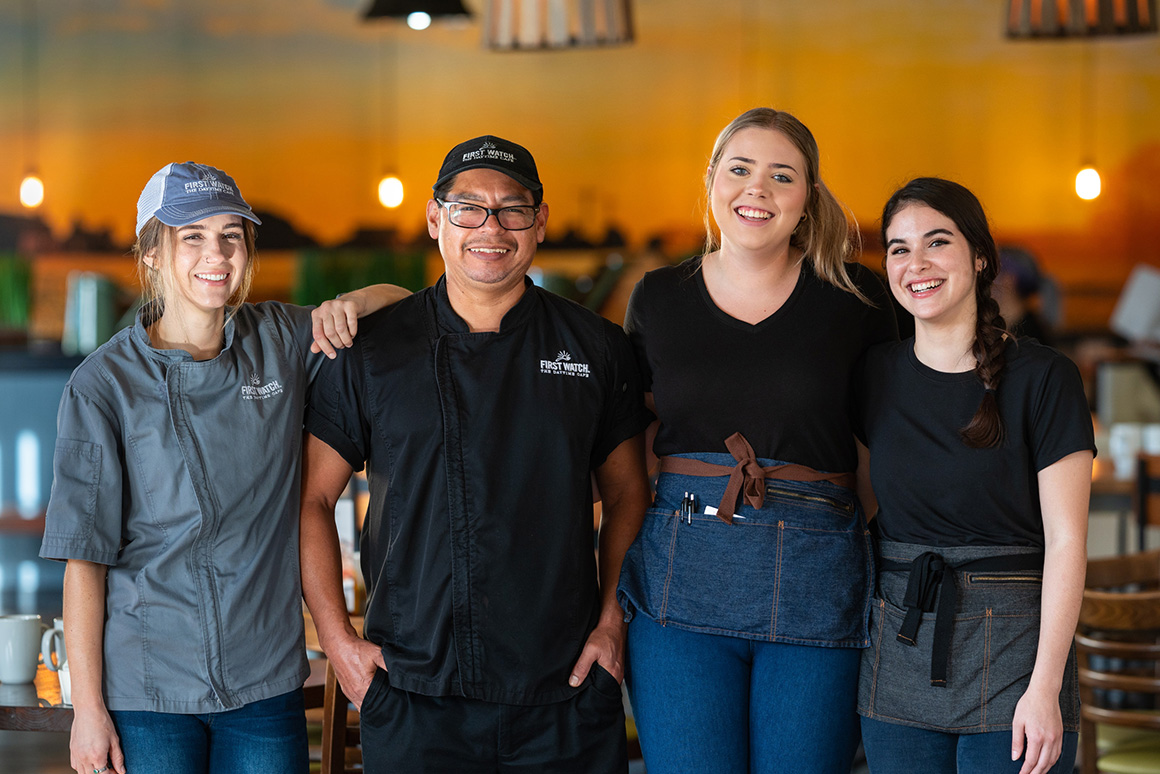
At First Watch restaurants, things are simple. From the classic breakfast and lunch menu items to the crux of their internal culture: "You First."
This not only means holding open the door for customers and greeting them with a friendly "good morning," but it is felt in how the company treats and values each employee across the company.
First Watch is a daytime dining restaurant founded in 1983 serving made-to-order breakfast, brunch and lunch in 535 locations across 29 states.
"Everything's just kind of rooted in the golden rule—just treat people how you want to be treated," CEO and President Chris Tomasso told Newsweek. "We have this saying internally [that] our job is to make days brighter. We try to make days brighter for our employees and our employees know that they have a big responsibility to try to make days brighter for our customers."
First Watch was recently ranked as the No. 1 company on Newsweek's America's Most Loved Workplaces 2024 list. The ranking was compiled in partnership with the Best Practice Institute using data from BPI's Love of Workplace Index, which surveys employees on factors like collaboration, innovation, leadership trust and belonging.
BPI's founder and CEO Louis Carter told Newsweek that First Watch landed the top spot due to its "exceptional commitment to fostering an emotionally connected environment."
The company made a big leap from last year's list, where it ranked at 51. Carter said this improvement is "deeply connected to internal programs, cultural alignment and a strong legacy of leadership that continues to inspire their people."
First Watch has a robust set of employee benefits, including education assistance through a free high school diploma program and reduced tuition rates for online degrees, health insurance and backup child care and eldercare. But what really makes First Watch stand out to potential employees is the culture.
"My career with First Watch began in 2019 when I visited one of our restaurants for the first time," Jenna Riahi, an operations manager at a restaurant in Perrysburg, Ohio, told Newsweek. "I didn't even know what I was signing up for when I came into the building. It's just the culture and the feeling that you get from being around these people that I was like, 'I want to be a part of this.'"
Riahi started as a busser but went on to be a server and a head waitress. During the COVID-19 pandemic, the company needed help in the kitchen, so she became a cook and a certified trainer. She then moved into management in Ann Arbor, Michigan, before returning to her home restaurant in Ohio.
The "You First" culture is an integral part of every operation at First Watch and is what makes the company unique, Riahi said. It means that company leadership puts its employees first, so that they, in turn, can put the customer first. It also enables employees to live the three core values of the company: Be kind, roll up your sleeves and stand shoulder to shoulder.
At any time, employees are helping co-workers by doing tasks outside their typical job description: The bussers help servers run food, and servers wash dishes and mop the floor. Everybody being involved in every position in the restaurant, Riahi said, is the number one thing that makes First Watch so successful.
While the essence of the culture can be felt the moment a customer walks through the front door, Chief People Officer Laura Sorensen realized that the company really needed to define what "You First" meant.
"This is who we've always been, now we just have the words behind them," she told Newsweek. "So much of what we do is making sure that we're creating the right systems and tools to support our leaders and all of our employees feeling like they can live those values every day in our restaurants."
The First Watch Academy of Restaurant Management, or FARM, is a multiweek training program for new managers that not only teaches them the basic skills of running a restaurant but how to establish the company culture locally.
"First Watch has just done a really good job of creating tools and development paths and making sure that people feel really supported in whatever role it is they want to achieve," Angela Mitchell, a regional vice president of operations based in Virginia, told Newsweek.
According to BPI, First Watch's 2024 Come Grow With Us event engaged over 3,200 team members, with the goal of reaching 60 percent internal promotion. This not only ensures employees are seen as partners in the company's growth, but fosters loyalty and engagement, BPI said.
As First Watch continues to grow as a business, leadership is focused on keeping up their values and commitment to "You First."
"I think we've all seen high-growth companies kind of lose their way, at least in the restaurant industry," CEO Tomasso said. "The culture gets diluted rather than strengthened during that growth."
Despite having more than 500 locations, Tomasso said First Watch is "kind of scrappy" and agile in its ability to make decisions quickly.
"We have this philosophy: If we can do it in one [restaurant], we can do it in 100 restaurants. If we can do it in 100, we can do it in 1,000," he said. "It doesn't matter how big we are, we can still be entrepreneurial. And I think that's been a key component of our success and our growth."
Tomasso, along with other leadership, also hosts virtual town halls called the "We Hear You," or WHY, Tour. Hourly employees and their managers are able to share feedback and ideas for improvement. Several real actions have come from these discussions, including new technology systems in restaurants and new trays to accommodate larger plates.
Having a strong internal culture allows companies to be resilient—especially in an industry as tumultuous as food service.
During the COVID-19 pandemic, First Watch closed its restaurants and furloughed over 8,000 employees. When operations started up again and people came back to work, leadership was conscious that this unprecedented time may have taken a mental, emotional and financial toll on employees.
In addition to getting everyone access to the Calm app to help with mental health concerns, First Watch was adamant about "making everyone whole" on whatever compensation they lost during that time. And that impact, Tomasso said, went beyond the checks First Watch wrote.
"We had talked the talk about culture, and now it was being tested," he said. "I'm very proud of the way the team stepped up and did that. And I think that has created even stronger loyalty and stronger commitment."
As the company grows, Chief People Officer Laura Sorensen said First Watch is primarily concerned with how it makes people feel.
The challenge comes with keeping a local, individual feel to each restaurant while still maintaining the overall company culture. Sorensen likens that balance to juggling a glass ball among rubber balls.
"If we're working on a program to maybe innovate and try something new, and it doesn't work out, we drop it. And that's okay, because we can try again and maybe come up with a better program," she said. "But the culture, how we treat people, that's the glass ball and we cannot drop that one."